
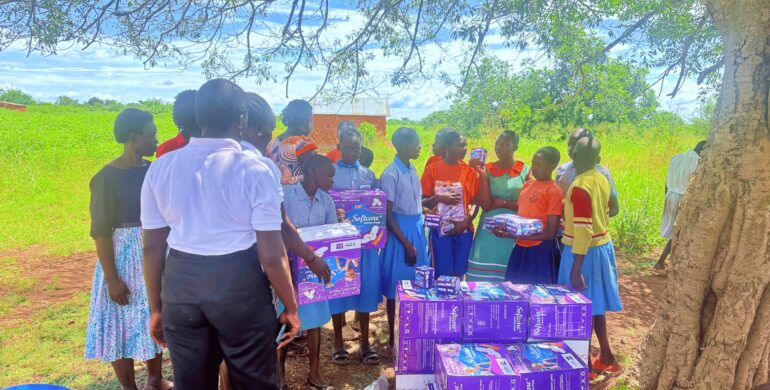
Every month, thousands of schoolgirls across Uganda face a silent crisis. It has nothing to do with academic ability or motivation. It has everything to do with something as basic — and as overlooked — as their period.
When a girl has no access to sanitary products, missing school is not a choice. It is a necessity. Studies across sub-Saharan Africa consistently show that girls miss between three and five school days every month during menstruation. Multiply that across a full academic year, and a girl can lose up to 20% of her learning time — not because she lacks the desire to learn, but because she lacks a pad.
The Silence That Costs Girls Their Future
In many communities we serve, menstruation is still surrounded by shame and silence. Girls are not taught what to expect when their bodies change. Teachers — especially male teachers — often avoid the topic altogether. Parents, themselves undereducated on hygiene, pass down misinformation or simply say nothing at all.
The result? Girls feel embarrassed, confused, and unprepared. Many improvise using pieces of cloth, paper, or leaves — materials that are uncomfortable, unreliable, and a breeding ground for infection. For some, the anxiety of leaking in class becomes so overwhelming that they stop attending altogether.
And when a girl drops out of school — even temporarily — the risk of her never returning increases dramatically.
What ReachApac Is Doing About It
At ReachApac, we believe that a girl’s period should never be the reason she misses her future. Our menstrual hygiene program works on three levels:
1. Education First We conduct community and school-based sessions that teach girls — and boys — about menstruation in a frank, shame-free environment. When boys understand what girls go through, stigma begins to break down. When girls understand their bodies, they stop being afraid of them.
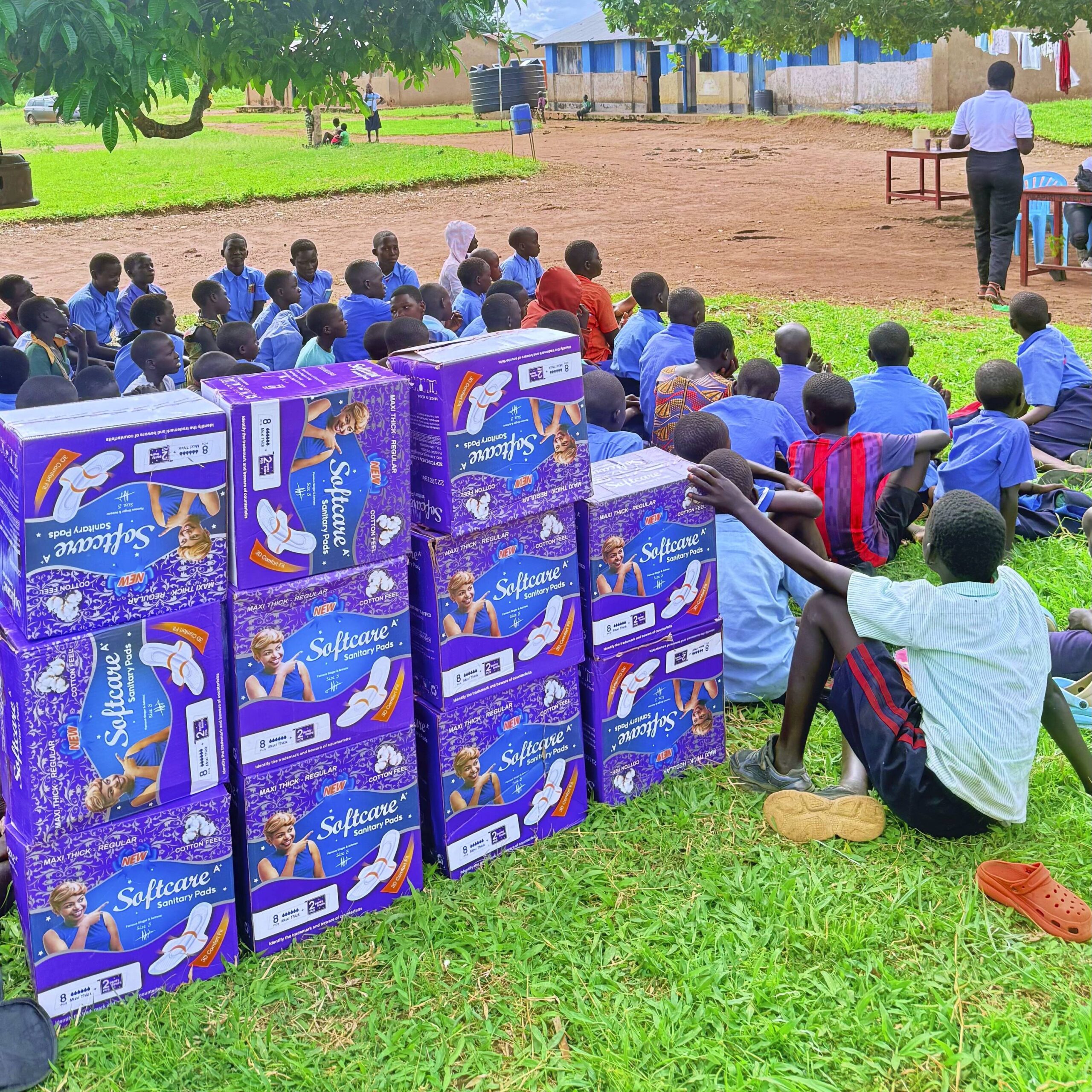
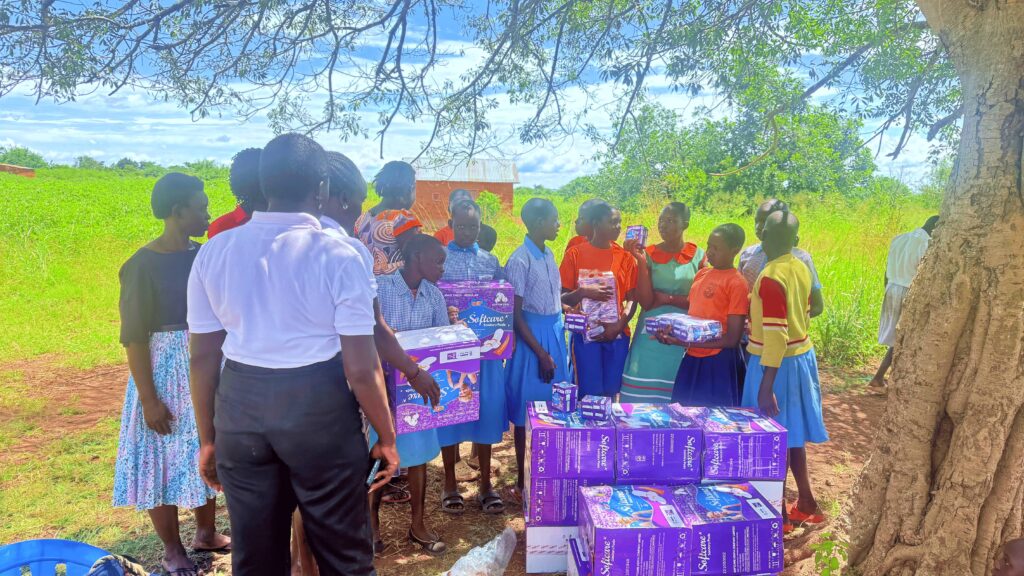
2. Access to Products We distribute sanitary kits to girls from low-income households. Each kit contains reusable pads, soap, and a hygiene guide. Reusable pads are a game-changer — they are washable, long-lasting, and eliminate the monthly cost that many families simply cannot afford.
3. Training for Teachers and Parents A girl who understands her body but goes home to a family that still treats menstruation as taboo remains stuck. We work with parents and teachers to create environments — at home and at school — where menstruation is treated as the normal biological process it is.
The Difference We Have Seen
In communities where we have run our hygiene programs, teachers report improved attendance among teenage girls. Parents tell us their daughters are more confident. Girls themselves say they no longer feel like they have to hide or make excuses.
One student from a school in northern Uganda told our team: “Before, I used to stay home. I was embarrassed. Now I know what to do and I have what I need. I have not missed school in months.”
That is what access and education look like in action.
How You Can Help
For just UGX 15,000 — less than the cost of a meal at a restaurant — you can provide one girl with a reusable sanitary kit that will last her an entire school year. For UGX 50,000, you can sponsor hygiene education for an entire class.
Girls in Uganda are ambitious, talented, and determined. They deserve every chance to learn. Help us make sure that something as manageable as menstruation never stands between a girl and her education.
Donate Today and Keep a Girl in School